Six Chimneys at Dusk: A Smoke-Reader's Walk Through Kirkbymoorside
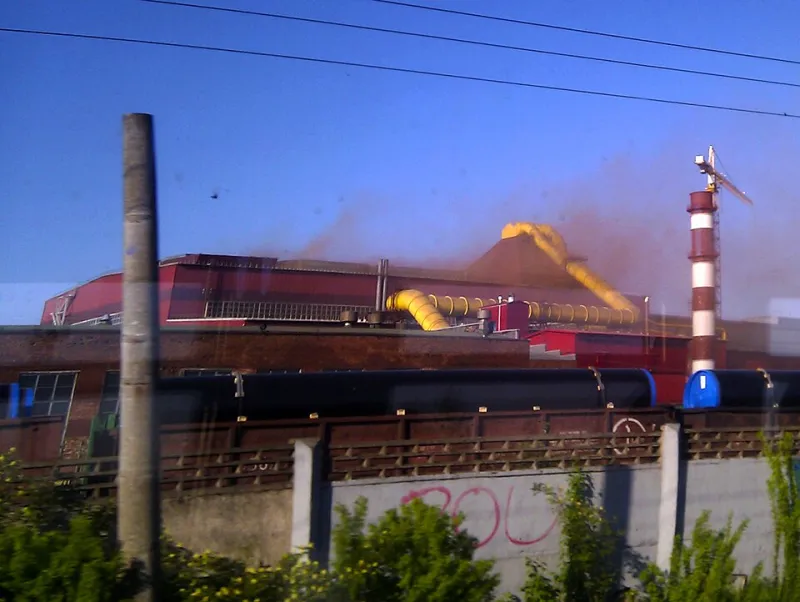
Photo: English: Andrew Krizhanovsky Русский: Андрей Крижановский, Public domain, via Wikimedia Commons
Mid-November in Kirkbymoorside hands you roughly forty minutes of usable dusk. By half four the sun has dropped behind the western roofs, the square has gone that flat blue-grey, and the first thing to catch the last of the light isn't the church tower or the shop fronts — it's the smoke. Six, seven, a dozen threads of it, lifting off the town at slightly different angles depending on which side of a gable you're standing. That's the walk. Not a big one, not a taxing one, but about ninety minutes of slow pavement work that turns the roofline into something worth reading.
Before You Set Off
Timing matters more than kit. Aim to leave the square at about quarter past three — late enough for the first fires to be lit, early enough to still see which pot the smoke is coming out of. A small torch is fine, but keep it pointed at the pavement rather than the windows; nobody wants to be spotlit while they're putting the kettle on. Grippy boots, a warm layer, and a dog on a short lead if you've brought one. The loop is under two miles, almost entirely on made ground, with one short stretch of uneven verge near the beck.
The Square, and Why Smoke Has a Colour
Start at the cross in the Market Place with your back to the shops and look east along the roofline. You'll see the basic grammar of the thing within a minute. Thin, near-invisible blue smoke means hot, dry fuel and a well-drawn flue — someone with a good stove and a decent log store. Dense white plumes that hang and sink are the opposite: unseasoned wood, a cold chimney, or a fire that's been damped right down for the evening. Grey-black smoke with a bit of a bite to it usually means someone's burning something they shouldn't, or an old appliance that's seen better decades.
There's a third category, and it's the interesting one: nothing at all. Plenty of these houses have never had a fire in them, or the chimney's been capped and the old stack is just a decorative stub above the slates. Half of reading a town at dusk is noticing the absences.
Slates, Pots and the Shape of a Stack
The buildings do a lot of the talking for you. The older cottages around the square and up the lanes carry stone slates, thick and uneven, with squat stacks of local stone and a single buff or terracotta pot on top. Those chimneys were built for open hearths and coal, and most have been lined since — which is why they sometimes smoke a bit sullenly while the flue warms through.
The Victorian and Edwardian stuff, and the old mill buildings down towards Kirkby Mills, give you something different: taller, sharper stacks, often in brick, sometimes with four or six pots in a row. That's a building that once needed to shift a lot of smoke in a hurry, and you can still see the hierarchy of the town in the height of its chimneys if you look along the ridge.
Up Past the Churchyard
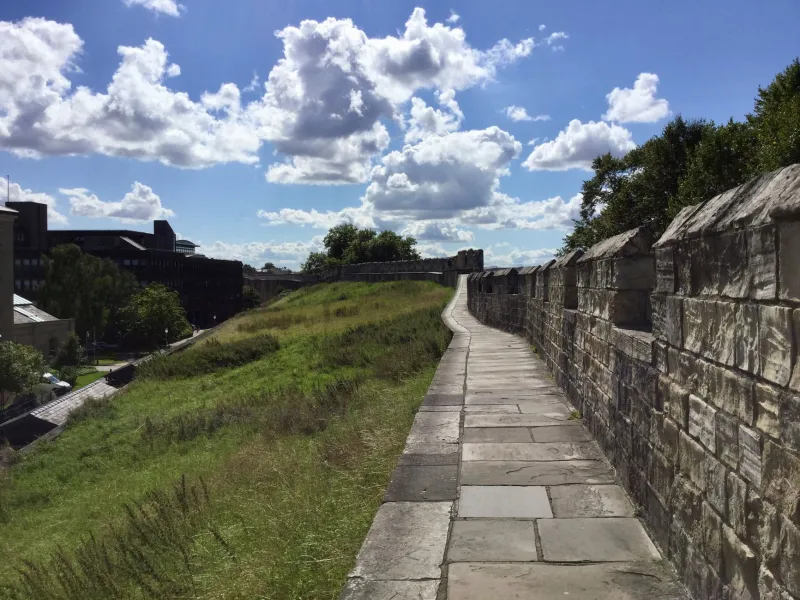
Walk north from the square, take the lane that skirts the churchyard, and stop where the wall runs along the top of the rise. This is the best vantage in town, because you're looking down onto the roofs rather than up at them, and the smoke reads clearly against the pale western sky.
This is also where the weather shows itself. On a still, damp evening after a wet week, the smoke lifts a little and then flattens out into a grey band about rooftop height — an inversion doing its quiet work, trapping cooler, heavier air under warmer air. That's the same damp moorland air that makes November feel colder than the thermometer claims. On a breezy night, the smoke runs off sideways and the whole town smells of woodsmoke and wet stone. Both are good walking weather; the flat, foggy version is the one to wrap up for.
Kirkby Mills and the Long Chimneys
Drop down towards the beck and follow the path along to the old mill buildings. The chimney here is the town's outlier — tall, industrial, built for a boiler rather than a parlour. It doesn't smoke much these days, and when it does it smells of nothing in particular. Worth the detour anyway, because it marks the point where the walk changes character: behind you, domestic; ahead, the edge of town and proper dark.
A Word on Etiquette
This is a residential walk, not a heritage trail, and dusk is when people are home. Keep to the pavement and the public lanes. Don't stand at gates. Don't photograph lit windows. If a dog barks at you, move on rather than apologise to the house. And leave the hedgerows alone — the odd fallen branch looks like fair game, but in November half of it is somebody's next winter's kindling and the other half is habitat.
What the Smoke Says About the Wood
The fuel question follows you round the loop, because the smell changes street by street. Clean, sweet smoke usually means ash, beech or sycamore, all of which are in good supply around here — ash especially, given how much of it has come down in recent years. Hawthorn and birch give you a sharper, more peppery note. Anything with a chemical edge to it is a stove running too cool, or household waste going where it shouldn't.
The practical rule that everyone in the Dale repeats: burn dry, burn hot. Logs below about twenty per cent moisture, split and stacked with air moving through them for a year, ideally under cover but open to the wind. Kiln-dried bags from the garage do the job if you're short, and the Ready to Burn logo on the bag is the quick check. Damp wood doesn't just smoke badly — it clags up the flue and pays you back in a chimney sweep's bill in February.
Back Into the Light
Come back along the beck and up into the square, where the pub windows are doing their best impression of a hearth and somebody's chimney above the King's Head is already in full flow. Ninety minutes, two miles, no hills worth the name — and yet you'll have read the town's fuel, its weather, its building history and a fair bit of its gossip without knocking on a single door. Do it once a fortnight through the winter and you'll start to notice when a chimney goes quiet. That's when you know you've properly arrived.