A Lunch With Altitude: Building a Kirkbymoorside Picnic, Counter by Counter
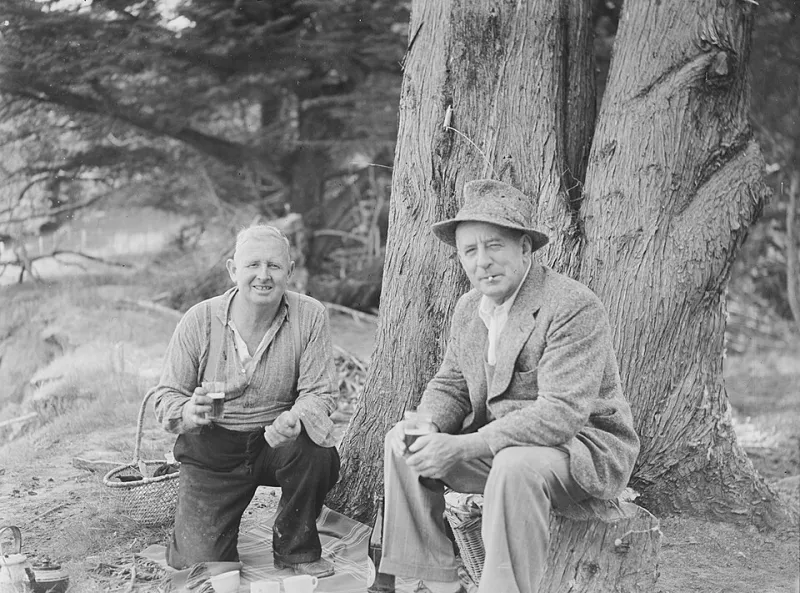
Photo: Collins, Tudor Washington, 1898-1970, photographer, CC BY 4.0, via Wikimedia Commons
There's a particular kind of hunger that only arrives about forty minutes into a walk out of Kirkbymoorside, and it's always accompanied by the realisation that you've brought nothing to answer it with. A packet of something sad from a petrol station, maybe. This guide exists so that doesn't happen to you.
The good news is that a genuinely excellent picnic doesn't require a cool box, a shopping list as long as your arm, or a detour. It requires a short wander around the square, a bit of restraint at each counter, and a bag you can carry uphill without regret. Town first, moor second — that's the whole method.
Buy it in this order, not that one
The temptation is to start at the bakery, because it smells the best. Resist for twenty minutes. Bread bought first will spend the rest of your shopping trip being crushed under a pork pie.
Start at the butcher's. Cured and cooked things — a slice of ham, a small pork pie, a bit of smoked sausage — are the backbone of a picnic precisely because they don't mind a warm afternoon in a rucksack. Ask for the ham cut a little thicker than you would for a sandwich; it travels better and eats better with a knife. If there's a pie with a proper crust on it, that's your main course sorted.
Next, the greengrocer. This is where most picnic bags go wrong: too much soft fruit, not enough crunch. Two apples, a couple of tomatoes, a cucumber if you're feeling organised, and something with a bit of bite — radishes, a handful of salad leaves that can survive a squash. Acid and texture are what stop a picnic feeling like a bag of beige.
Then the deli, for cheese and a jar of something. A hard cheese holds up beautifully; a soft one will surrender in the heat. Chutney, piccalilli, a spoonful of something pickled in a small tub — this is the difference between 'we had some bits' and 'we had lunch'.
Bakery last. A small loaf or a couple of rolls, and if you're walking with someone who appreciates a proper pudding, a flapjack or a tiffin square that won't dissolve. Say no to cream cakes. Say yes to a second flapjack.
The small extras that make the difference
Nobody's ever regretted packing a knife. Nor a cloth to sit on, a bag for the rubbish, or a flask of something hot even in July — the moor has opinions about temperature and it doesn't always share them in advance.
Salt and pepper in a twist of paper, a little bag of pickled onions, a bottle of water you'll actually drink on the way up rather than carry home again. If you're planning to finish with a pint back in town, go easy on the drink in the bag; nobody wants to climb a hill with two litres of lemonade on their back.
One thing worth buying locally and using properly: a waxed cloth or two instead of cling film. They fold around a wedge of cheese or half a loaf, they don't blow about in the wind, and they come home with you rather than into a bin on the moor.
Packing for a sky that can't commit
Changeable isn't a warning here, it's the default. So build the bag in layers. Anything that can be squashed goes at the bottom. Anything with a crust goes near the top, wrapped, so it doesn't end up tasting of cheese and rucksack.
Keep the meat and cheese together in one bag if it's a warm day, and put that bag against the coolest thing you've got — a chilled bottle of water does the job. If you own a small freezer block, this is the day it earns its keep. If not, don't fret: buy the meat on the way out of town rather than at nine in the morning, and eat it within a few hours.
And take a bag within a bag. A cloth to sit on doubles as a windbreak for your sandwiches when the forecast turns. A spare plastic bag for rubbish means you're not the person leaving apple cores on a drystone wall.
Where to take it
You don't need a summit. You need twenty minutes of walking and somewhere to sit that isn't the car park.
The gentlest option is the old railway line path, which is flat enough to carry a loaded bag without complaint and gives you a straight run out of town before you pick a spot. Follow it far enough and you'll find edges, gates and grassy verges where a cloth goes down nicely.
If you want a view back over the town, head uphill on any of the lanes climbing towards the moor edge. The reward is the shape of Kirkbymoorside seen whole — rooftops, the tower, the green smudge of the churchyard — with the moor rising behind it. There are benches on some of these lanes, and walls that have been sat on for a very long time. Both are acceptable.
For something a shade more committed, take a path up onto the moor proper. It's not Everest, but it is uphill, and the pay-off is that particular silence you only get a few hundred feet above a town. Pick your spot before you're hungry. Hunger makes people accept bad picnic sites.
The bit afterwards
Pack out what you pack in, take the crusts home with you, and mind the livestock — this is working countryside, and a picnic blanket near a field of sheep is a conversation nobody wants to have. Close gates. Keep dogs on leads where the signs ask. Leave the wall stones where they are.
Then walk back down, and if the day's been a good one, spend the last of it in a beer garden rather than a kitchen. You've done the shopping, the carrying and the climbing. Someone else can do the washing up.