Cloud Stacking and Cows: A Sceptic's Weather Walk from Kirkbymoorside
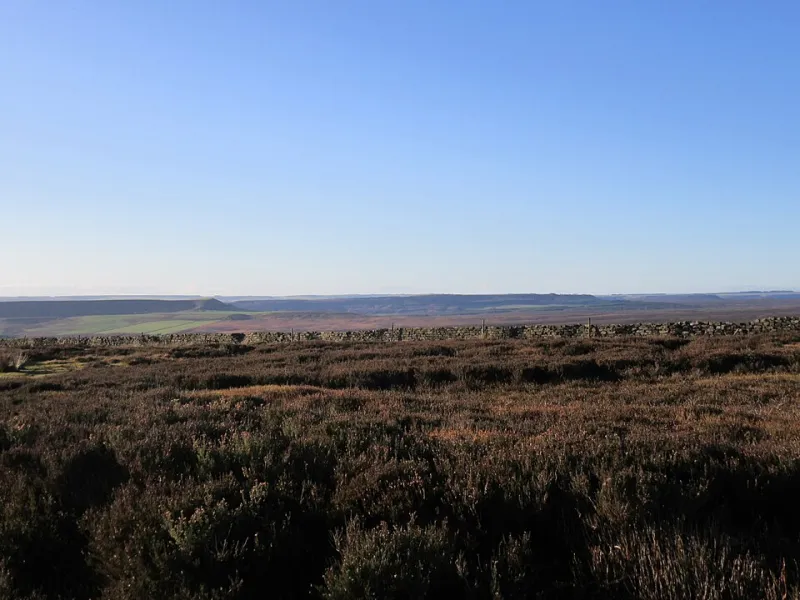
Photo: T Eyre , CC BY-SA 2.0, via Wikimedia Commons
By mid-November, Kirkbymoorside has settled into its damp, low-light gear. The square is quieter after four, the moors look close enough to touch, and every pub conversation eventually turns to whether it will hold off until the weekend. That is prime weather-lore territory. Everyone has a saying. Everyone has an aunt who swears by it.
I am not here to knock the old ways. But I am here to test them. Over a few days I walked a short sky-watching loop out towards Marton, kept one eye on the Met Office app and the other on Rudland Rigg, and asked a handful of locals which rules they actually use. The result is less a mystical moorland almanac and more a practical filter: which sayings earn their place in your jacket pocket, and which ones are just a good excuse to stay in the pub.
The sayings worth carrying
Most of the lore repeats across the moors, with local accents. The greatest hits are still the greatest hits.
Red sky at night, shepherd's delight. This one has real meteorological backing, at least in a broad sense. In our latitudes, weather usually arrives from the west. A red sunset often means high cloud is catching the last light as a front clears east, with clearer air behind. It is not a guarantee for the next 24 hours, but it is a decent signal for the next morning.
Mackerel sky, never long dry. High, rippled altocumulus often precedes a change. It does not always mean rain within the hour, but it is a reasonable nudge to take a shell rather than trust a blue patch.
A halo round the moon means rain coming. Halos are caused by ice crystals in high cloud, often ahead of a warm front. Statistically, it is one of the better old signs. In practice, it tells you to check the forecast rather than cancel the walk.
Ash before oak, we're in for a soak; oak before ash, we're in for a splash. This is a seasonal rhyme, not a daily forecast. It compares when ash and oak come into leaf in spring. It is a nice thing to notice, but it will not tell you whether to set off for Gillamoor on a Tuesday in November.
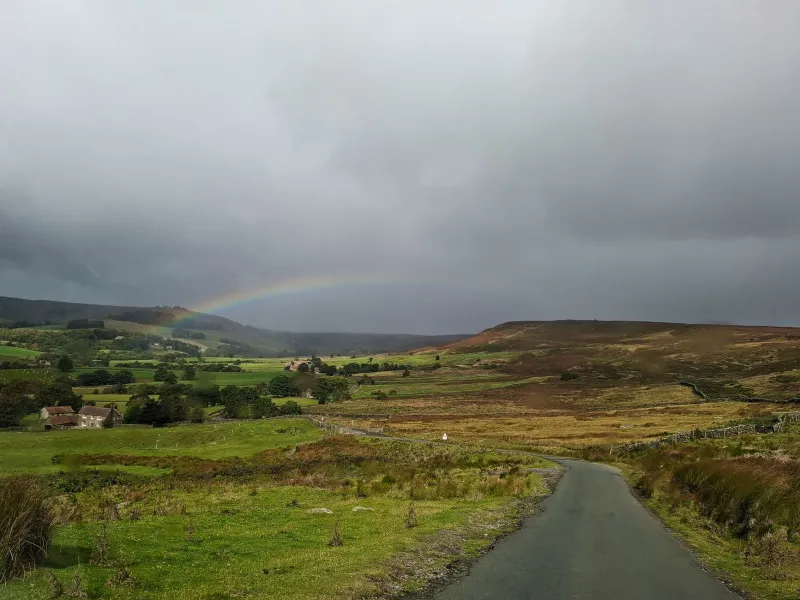
When the clouds stack over Rudland Rigg, get down. This is the local one I heard most often, and it has a grain of truth. The rigg can force air upwards, so cloud can pile along the ridge while the town stays bright. Stacking cloud over the moor is often a sign of showers building. It is not a prophecy, but it is a useful visual prompt: look west, look up, and decide before you commit.
Cows lying down means rain. Cows lie down for many reasons: chewing, comfort, wind, flies, boredom. This one is charming but unreliable. Treat it as scenery, not science.
Swallows flying low means rain. There is something in it — low pressure and humidity can keep insects lower, and birds follow food — but by November the swallows have gone. It is a summer saying wearing a winter coat.
A short route for reading the sky
You do not need a summit to test these. A simple there-and-back out of town towards Marton gives you open sky without committing to a full moorland day. Start at the Market Place, head west out of town, and take a lane or footpath that opens up views towards the rigg. The exact turning matters less than the principle: get clear of the roofs, find a gate or a field edge, and spend ten minutes looking rather than walking.
Go in the early afternoon if you can. In November, light goes early and the temperature drops fast once the sun is low. Take a torch even for a short walk, wear something that will cope with wet grass, and keep to rights of way and open access land. This is a sky-watching route, not a secret trail. If the cloud is already down on the tops, stay low and enjoy the town instead.
Stand still. Look west. Note the cloud base, the wind direction and whether the rigg is wearing a cap. Then look at your phone forecast. The point is not to choose one over the other, but to see where they agree.
How the lore performed
Over a handful of days, the red-sky rule did well for the next morning. The mackerel-sky warning was early rather than precise: it flagged a change, but not the timing. The moon halo was the most reliable of the lot, though it only appeared once and the rain arrived about eighteen hours later. Cloud stacking over Rudland Rigg was genuinely useful as a nowcast: when the stack built, showers followed within a couple of hours. The cows remained cows.
The honest conclusion is that old weather sayings are best treated as local observations, not predictions. They are pattern notes passed down by people who spent more time outside than most of us do. That makes them worth listening to, but not worth betting the day on.
The decision table
Use the forecast as your first call and the lore as a tiebreaker. This is the rough table I ended up using.
| What you see | What the forecast says | Risk | Call |
|---|---|---|---|
| Red sky at sunset, clear west | Dry until midday | Low | Good morning walk; take a shell anyway |
| Mackerel sky, wind backing | Rain later | Medium | Short low-level loop; keep an escape route |
| Halo round the moon | Dry but changeable | Medium | Expect a change within a day; don't trust a long moorland route |
| Cloud stacked over Rudland Rigg | Showers possible | Medium to high | Stay low or go out early; avoid exposed tops |
| Moor wearing a cap, drizzle in town | Rain or low cloud | High | Pub, shop, or a short town walk |
| Bright town, dark rigg, cows lying down | Anything | Unknown | Ignore the cows; check the radar |
What to do with a mixed sky
Mixed skies are the norm here, not the exception. The useful habit is to check three things before you set out: the current radar, the wind direction and the cloud over the rigg. If the forecast and the sky agree, go. If they disagree, shorten the route. If the moor has vanished, assume it is not coming back quickly and choose a low-level walk or a pint.
That is not a rejection of local wisdom. It is just the modern version of it. The old sayings were never meant to be read alone. They were read by people who knew the ground, knew the season and knew when to turn back. The sky above Kirkbymoorside still tells a story. The forecast just helps you read the ending before you set off.